What Is Conference Room Digital Signage?
Conference room digital signage refers to digital displays placed inside or outside meeting rooms that communicate real-time information about room usage, schedules, availability, and meeting details. These displays replace or augment traditional static signs, paper schedules, or whiteboards with dynamic, connected screens that update automatically.
In modern workplaces, conference room digital signage is a key component of smart office infrastructure. It improves efficiency, reduces scheduling confusion, and enhances the overall meeting experience for employees, visitors, and administrators alike.
The Core Purpose of Conference Room Digital Signage
At its most basic level, conference room digital signage answers three essential questions:
- Is this room available right now?
- Who is using it, and for how long?
- What meeting is happening next?
By making this information visible at a glance, digital signage eliminates the guesswork that often leads to interruptions, double bookings, or wasted time searching for space.
Beyond scheduling, these displays also support branding, wayfinding, and internal communication, turning meeting rooms into intelligent, responsive environments rather than isolated spaces.
Where Conference Room Digital Signage Is Used
Conference room digital signage is typically installed in one of two locations.
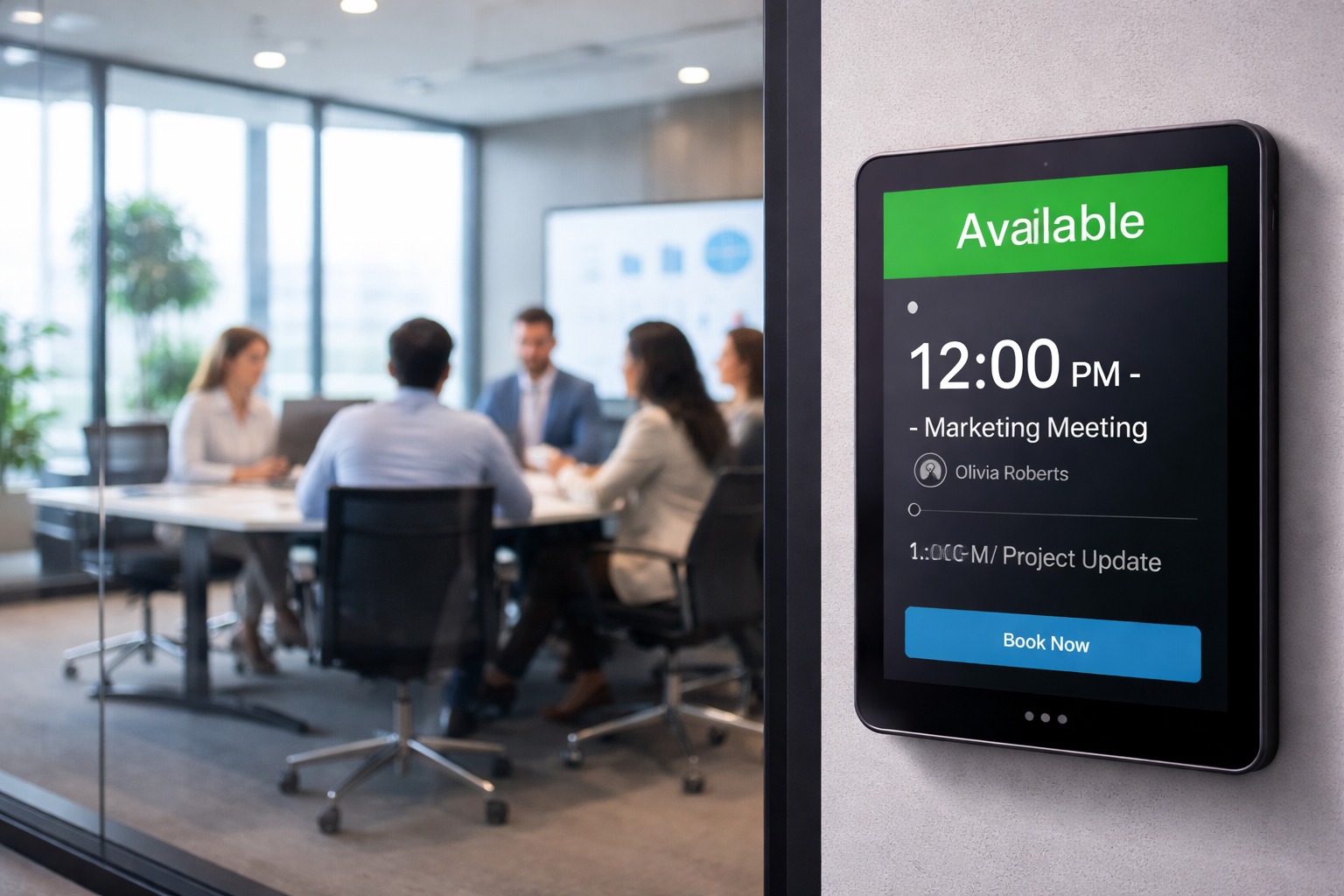
Outside the room, signage acts as a room status display, showing availability, meeting titles, organizer names, and time remaining. This placement helps people quickly decide whether they can enter or should move on.
Inside the room, signage may function as a welcome screen or meeting dashboard, displaying the meeting name, agenda, company branding, video conferencing details, or instructions for using room technology.
Many organizations use both, creating a seamless experience before and during meetings.
How Conference Room Digital Signage Works
Conference room digital signage is usually connected to a room booking or calendar system, such as Microsoft Outlook, Google Calendar, or a dedicated room management platform. The display pulls data from these systems and updates automatically in real time.
When a meeting is scheduled, the signage reflects it immediately. If a meeting ends early or is canceled, the room status changes without manual intervention. Some systems also allow users to book the room directly from the screen, using touch interaction or proximity sensors.
Because the signage is networked, updates can be managed centrally by IT or facilities teams, reducing administrative workload and ensuring consistency across the organization.
Key Features of Conference Room Digital Signage
While features vary by platform, most conference room digital signage systems include:
Real-time room availability indicators that use color coding (such as green for available and red for occupied) to convey status instantly.
Meeting details such as meeting title, start and end time, organizer name, and upcoming schedule.
Integration with corporate calendar systems to ensure accuracy and avoid double booking.
Touchscreen or interactive capabilities that allow on-the-spot reservations or check-ins.
Custom branding elements, including company logos, color schemes, or welcome messages for visitors.
Some advanced systems also include analytics, occupancy sensors, or integration with building automation systems, enabling organizations to optimize space usage based on actual behavior rather than assumptions.
Benefits for Organizations
Conference room digital signage offers both immediate and long-term benefits.
On a practical level, it reduces friction. Employees no longer interrupt meetings to check availability, wander hallways looking for space, or rely on outdated schedules. Meetings start on time more often, and rooms are used more efficiently.
From an operational standpoint, signage provides visibility into how meeting spaces are actually used. Over time, this data can inform decisions about smart space planning, room sizing, and future office design.
From a cultural perspective, digital signage contributes to a more modern, organized, and professional workplace environment, especially for clients or partners visiting the office.
The Role of Digital Signage in Hybrid and Remote Work
As hybrid work becomes standard, conference room digital signage has taken on additional importance. Many displays now integrate with video conferencing platforms, showing meeting join details, participant status, or instructions for hybrid collaboration.
This reduces technical friction and ensures that in-person and remote participants experience smoother, more inclusive meetings.
Digital signage also helps organizations manage fluctuating office attendance by clearly indicating which spaces are in use and which are free, even when overall occupancy is lower or unpredictable.
Conference Room Digital Signage vs. Traditional Room Signs
Traditional room signs are static and quickly become outdated. They rely on manual updates, which are prone to error and neglect. Digital signage, by contrast, is dynamic, automated, and scalable.
Where a paper sign shows what should be happening, digital signage shows what is actually happening right now. This real-time accuracy is what makes it so effective.
Security and Privacy Considerations
Because conference room digital signage often displays meeting titles or organizer names, organizations must consider privacy settings. Most systems allow customization, such as hiding sensitive meeting details or displaying generic labels like “Reserved.”
Proper configuration ensures that transparency does not come at the cost of confidentiality.
The Future of Conference Room Digital Signage
As workplaces become smarter, conference room digital signage is evolving beyond simple scheduling displays. Emerging trends include AI-driven space optimization, predictive room availability, deeper integration with workplace apps, and sustainability tracking based on room usage.
In this context, digital signage is no longer just a display—it is part of a broader ecosystem that connects people, spaces, and technology.
Final Thoughts
Conference room digital signage is a practical, high-impact tool that transforms how meeting spaces are used and experienced. By providing real-time visibility, reducing scheduling friction, and supporting modern work patterns, it plays a critical role in efficient, well-functioning workplaces.
Rather than being a cosmetic upgrade, conference room digital signage is an operational asset—one that turns meeting rooms into transparent, intelligent, and responsive spaces.