What Is Digital Signage for Hotels?
Digital signage for hotels refers to the use of networked digital displays throughout hotel properties to communicate information, enhance guest experience, support operations, and reinforce brand identity. These displays replace or complement static signs, printed notices, and paper directories with dynamic, real-time content that can be updated centrally and instantly.
In the hospitality industry—where first impressions, clarity, and guest satisfaction are critical—digital signage is both a communication tool and a service enhancer.
The Role of Digital Signage in the Hotel Guest Journey
A hotel guest’s experience begins before they reach their room and continues through every interaction with the property. Digital signage supports this journey by delivering the right information at the right moment, without requiring staff intervention.
From welcoming guests in the lobby to guiding them through amenities, events, and services, digital signage helps hotels create a seamless, modern, and professional experience while reducing friction and confusion.
Where Digital Signage Is Used in Hotels
Digital signage is deployed across many areas of a hotel, each serving a specific purpose.
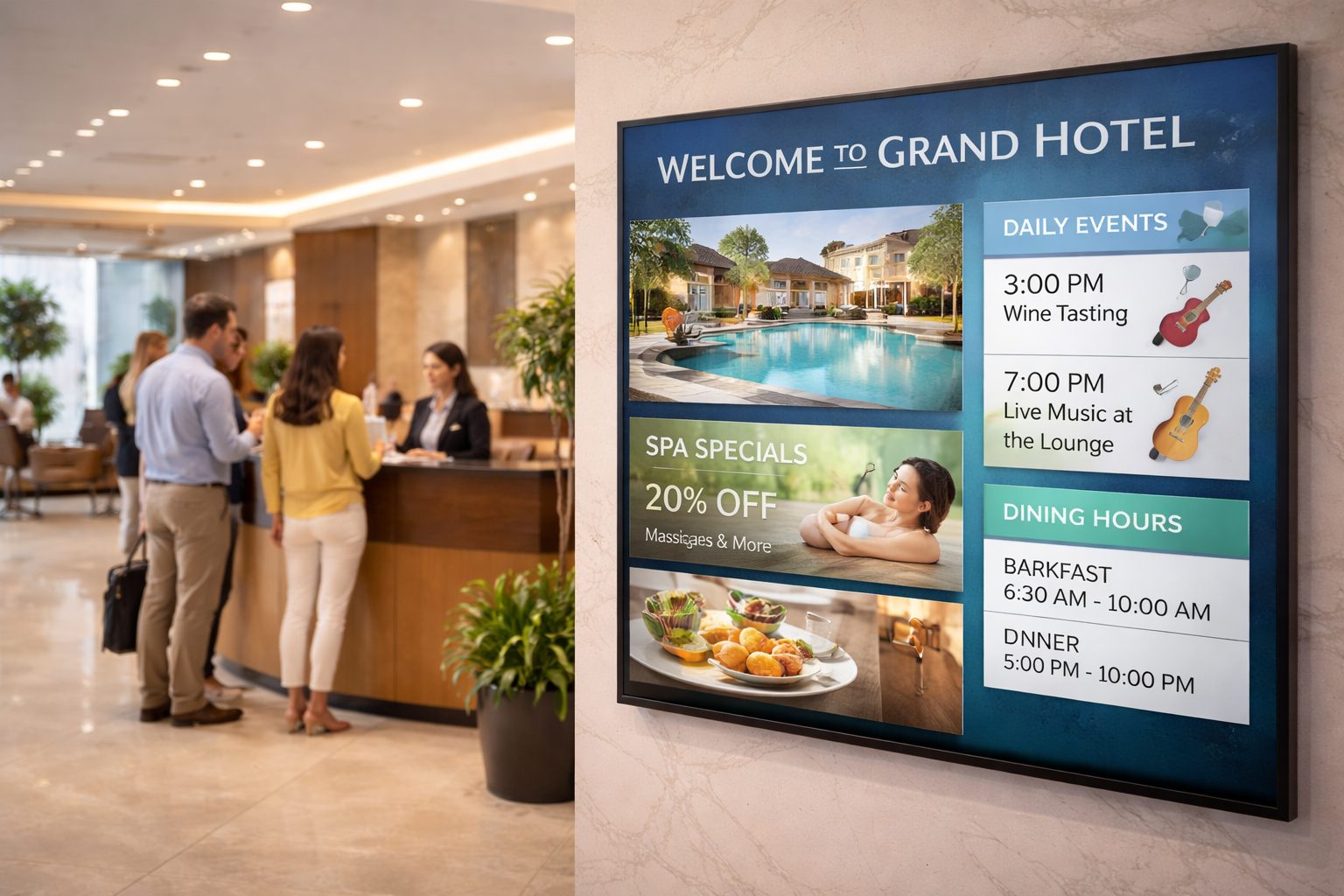
In lobbies and reception areas, signage is often used to welcome guests, display check-in information, promote amenities, and communicate important notices. These screens set the tone for the stay and help manage expectations.
At concierge desks and elevators, digital signage commonly provides wayfinding, event schedules, dining hours, spa availability, and local attraction information. This reduces reliance on printed brochures and repetitive questions to staff.
In conference and event areas, signage is used to display meeting schedules, room assignments, event branding, and directional guidance. For hotels that host conferences or weddings, this function is especially valuable.
In restaurants, bars, and spas, digital displays promote menus, daily specials, reservation availability, and upcoming events. Content can change throughout the day to reflect breakfast, lunch, dinner, or special promotions.
In hallways and near guest rooms, signage may be used for directional assistance, emergency information, or brand storytelling, while remaining subtle and unobtrusive.
Some hotels also use outdoor or window-facing digital signage to promote events, dining options, or seasonal offers to both guests and passersby.
Types of Content Displayed on Hotel Digital Signage
Hotel digital signage content typically falls into several categories.
Informational content includes check-in and check-out times, Wi-Fi instructions, property maps, and emergency notices. Clear access to this information improves guest comfort and reduces uncertainty.
Promotional content highlights hotel amenities such as restaurants, bars, spas, fitness centers, room upgrades, and loyalty programs. Because guests are already on-site, this content often leads to higher conversion than external advertising.
Event-related content is especially important in hotels that host meetings, weddings, or conventions. Real-time schedules, room names, and branding help guests navigate events smoothly.
Experiential content focuses on storytelling, showcasing the hotel’s atmosphere, values, or local culture through visuals and video. This strengthens brand identity and emotional connection.
How Digital Signage Improves Guest Experience
One of the most important benefits of digital signage in hotels is convenience. Guests can quickly find information without waiting in line or calling the front desk. This sense of autonomy improves satisfaction and reduces stress.
Digital signage also reduces perceived waiting time in busy areas such as reception or elevators by providing engaging, relevant content.
For international travelers, signage can display content in multiple languages, improving accessibility and inclusivity.
By delivering consistent, up-to-date information, digital signage helps hotels appear organized, attentive, and guest-focused.
Supporting Hotel Operations and Staff
Digital signage supports hotel staff by reducing repetitive questions and allowing teams to focus on higher-touch service. When guests can find answers visually, staff interactions become more meaningful rather than transactional.
Centralized content management allows hotel management to update messaging across the property instantly—useful for weather alerts, emergency communication, last-minute schedule changes, or special announcements.
Some hotels also use internal digital signage in staff-only areas for shift schedules, training reminders, or internal communications.
Integration With Hotel Systems
Modern hotel digital signage systems often integrate with property management systems, event management platforms, and content scheduling tools. This enables automatic updates, such as displaying the day’s events or adjusting content based on time or occupancy.
This integration reduces manual work and ensures accuracy, which is especially important in large or multi-property hotel groups.
Branding and Design Considerations
In hospitality, design matters. Digital signage must align with the hotel’s brand aesthetic—luxury, boutique, business-focused, or resort-style. Clean layouts, high-quality visuals, and calm motion help reinforce a premium feel rather than overwhelming guests.
Unlike retail signage, hotel digital signage is typically subtle and informative, designed to enhance the environment rather than dominate it.
The Role of Digital Signage in Modern Hospitality
As guest expectations evolve, hotels are expected to provide seamless, tech-enabled experiences while maintaining warmth and personal service. Digital signage supports this balance by handling routine communication efficiently, allowing staff to focus on hospitality rather than logistics.
In a competitive market, digital signage also helps hotels differentiate themselves through professionalism, personalization, and attention to detail.
The Future of Digital Signage in Hotels
Hotel digital signage is becoming increasingly intelligent and adaptive. Emerging trends include personalized content based on guest profiles, integration with mobile apps, touchless interaction, and real-time service updates.
As hotels continue to blend physical and digital experiences, digital signage will play a central role in connecting guests, spaces, and services.
Final Thoughts
Digital signage for hotels is not simply about displaying information—it is about enhancing the guest experience, supporting operations, and reinforcing brand identity.
When implemented thoughtfully, digital signage transforms hotels into more intuitive, efficient, and welcoming environments. It reduces friction, improves communication, and helps hotels meet modern guest expectations while maintaining the human touch that defines great hospitality.