Static vs Digital Signage: The Pros and Cons
In the world of business communication and marketing, signage plays a critical role in capturing attention, conveying messages, and shaping brand identity. Over the years, traditional static signage—like posters, banners, and billboards—has given way to more advanced digital signage technologies capable of delivering dynamic, real-time content.
Choosing between static and digital signage is no longer a simple decision; it’s a strategic one that can influence brand perception, customer engagement, and operational efficiency. In this guide, we’ll explore Static vs Digital Signage: The Pros and Cons, helping businesses understand the strengths of each and how to make the right choice for their environment.
As a trusted provider of innovative digital signage solutions, ScreensHub empowers organizations to transition seamlessly from static displays to intelligent digital systems that enhance visibility, engagement, and performance.
Understanding Static Signage
What Is Static Signage?
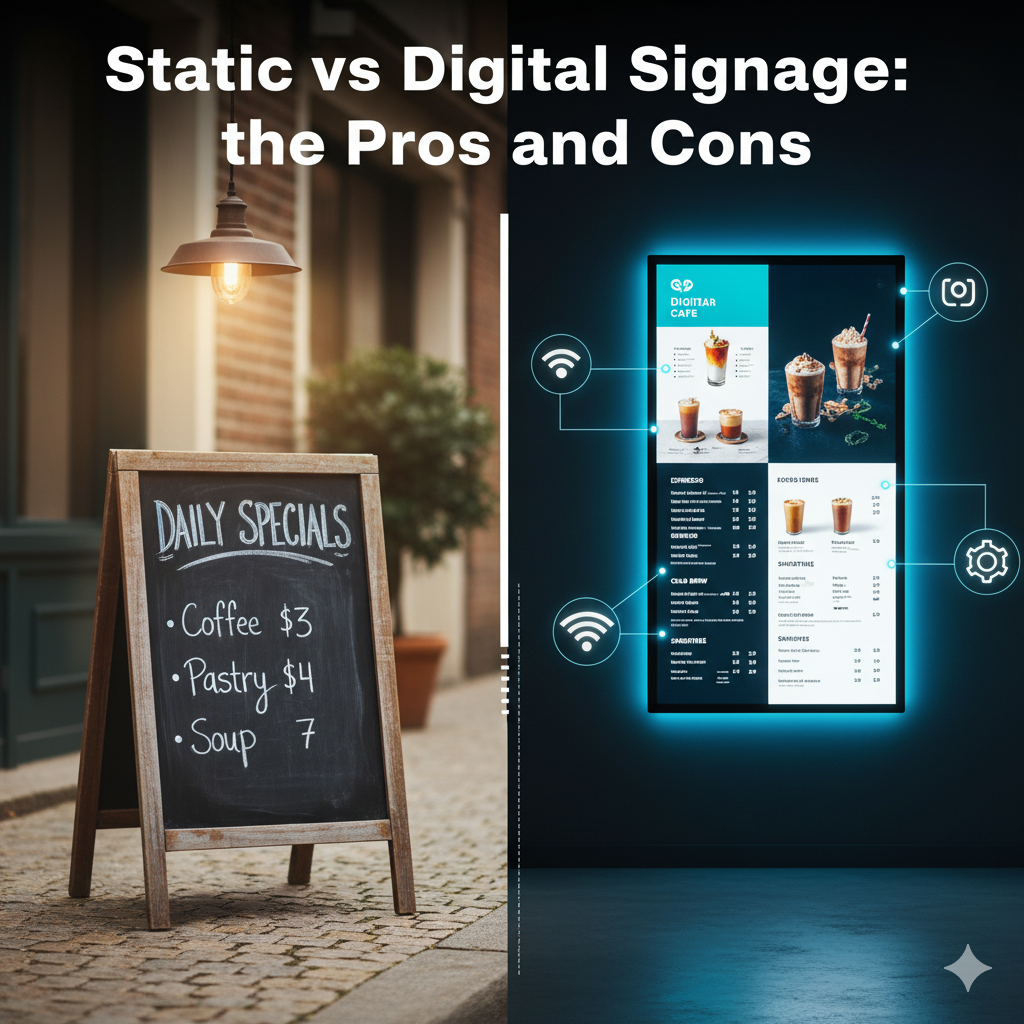
Static signage refers to traditional, non-digital displays such as printed posters, banners, billboards, and backlit light boxes. These signs feature fixed content that remains unchanged until it’s manually replaced or reprinted.
Characteristics of Static Signage
- Fixed Content: Once printed, messages cannot be updated without creating a new sign.
- Low Maintenance: Requires minimal upkeep beyond cleaning and replacement.
- No Power Needed: Operates without electricity, making it suitable for outdoor or remote locations.
- Durability: Often made with weather-resistant materials for long-term use.
Common Use Cases
Static signage remains effective for long-term or unchanging messages such as:
- Storefront branding and logos
- Permanent wayfinding signs
- Roadside billboards
- Safety and compliance signage
When Static Signage Still Works
While digital displays dominate modern communication, static signage continues to play a role in brand reinforcement, budget-sensitive projects, and low-maintenance environments.
ScreensHub recommends combining static and digital signage strategically—using static for consistent branding and digital for dynamic content updates.
Understanding Digital Signage
What Is Digital Signage?
Digital signage uses LED, LCD, or projection screens to display multimedia content such as videos, animations, and live feeds. It is managed via content management systems (CMS), enabling remote updates and real-time customization.
Key Features and Characteristics
- Dynamic Content: Supports videos, animations, and real-time data.
- Remote Management: Update content instantly across multiple locations through a centralized system.
- Interactivity: Enables user interaction through touchscreens, sensors, and QR codes.
- Analytics: Tracks viewer engagement and performance metrics.
Technology Components
Digital signage combines hardware (screens, players, mounts), software (CMS, analytics tools), and content design.
ScreensHub offers scalable digital signage solutions designed for businesses of all sizes, from single-store installations to enterprise-wide digital networks.
Static vs Digital Signage: A Comparative Analysis
| Feature | Static Signage | Digital Signage |
| Initial Cost | Lower upfront printing and installation cost | Higher initial investment in hardware and software |
| Content Flexibility | Fixed; requires reprinting for updates | Highly flexible; update content instantly |
| Maintenance | Minimal upkeep | Requires periodic software and hardware updates |
| Engagement | Limited to static visuals | Dynamic visuals, motion graphics, and interactivity |
| Targeting | Same message for all viewers | Targeted content by time, audience, or location |
| Operational Cost | Low after installation | Ongoing software and energy costs |
| Longevity | Long-lasting materials | Dependent on hardware lifespan |
| Use Case | Ideal for long-term, static messages | Perfect for dynamic or frequently changing campaigns |
| Environmental Impact | Generates paper/plastic waste | Reduces print waste but uses electricity |
Cost-Effectiveness Over Time
Static signage offers a cost advantage initially, but digital signage provides long-term savings by eliminating reprints, reducing labor, and enhancing ROI through flexible, real-time marketing.
Engagement and Reach
Digital signage significantly outperforms static signage in capturing attention, delivering personalized experiences, and driving action. With motion and multimedia, digital content achieves higher retention and engagement rates.
ScreensHub’s digital signage solutions are designed to maximize visual impact while optimizing content distribution and operational efficiency.
Applications and Industry Use Cases
Retail
- Static Signage: Ideal for permanent branding and store décor.
- Digital Signage: Best for promotions, flash sales, and interactive product displays.
ScreensHub’s retail clients use digital screens to display real-time deals, inventory updates, and social media content to enhance shopper engagement.
Corporate Environments
- Static: Office nameplates, permanent directories.
- Digital: Internal communication dashboards, event updates, and recognition screens.
ScreensHub helps corporations integrate digital signage into employee engagement and communication strategies.
Hospitality
- Static: Lobby décor and room direction signs.
- Digital: Digital menus, event boards, and check-in kiosks for guests.
ScreensHub’s hospitality solutions offer seamless guest information and promotional displays across multiple touchpoints.
Healthcare and Education
Hospitals and campuses benefit from digital wayfinding, announcements, and emergency alerts, where real-time updates are crucial. Static signs remain relevant for permanent facility markings.
Transportation
Airports and stations rely heavily on digital signage for schedules and live updates, while static signage remains effective for permanent safety instructions.
Choosing Between Static and Digital Signage
Key Evaluation Criteria
When deciding which signage type suits your business, consider:
- Budget – Evaluate upfront costs versus long-term ROI.
- Message Frequency – Determine how often your content changes.
- Audience Engagement – Choose based on desired interaction level.
- Location and Environment – Indoor vs outdoor placement needs.
- Brand Goals – Identify whether your focus is awareness or dynamic communication.
The Hybrid Approach
Many businesses find success with a hybrid strategy—using static signage for branding consistency and digital displays for engaging, time-sensitive content.
ScreensHub offers consultation services to help organizations design the ideal signage mix, ensuring every display—static or digital—works toward your communication goals.
Future Trends in Signage Technology
Integration of AI and IoT
The next generation of digital signage will use AI-driven content personalization and IoT connectivity, allowing screens to adapt in real time based on audience behavior, weather, or location data.
Advanced Analytics
Modern systems now deliver audience analytics—measuring impressions, dwell time, and engagement—to optimize content strategy.
Sustainability Focus
As businesses pursue eco-friendly practices, digital signage offers a reduced dependency on printed materials, although energy efficiency remains an area of innovation. ScreensHub emphasizes energy-saving hardware and sustainable digital operations.
Touchless and Interactive Experiences
With mobile and QR integration, contactless engagement has become a key part of digital signage evolution, enhancing both safety and convenience.
Conclusion
The choice between static and digital signage ultimately depends on your business objectives, message dynamics, and audience needs. Static signage remains relevant for permanent, low-cost displays, while digital signage excels in flexibility, engagement, and long-term impact.
As the digital landscape continues to evolve, combining both forms strategically can help businesses achieve maximum visibility and communication efficiency.
ScreensHub stands at the forefront of this transformation, providing tailored digital signage solutions that integrate seamlessly into retail, corporate, hospitality, healthcare, and transportation environments.
To learn more or schedule a personalized consultation, visit screenshub.com and discover how ScreensHub can help you modernize your signage strategy with smart, dynamic, and sustainable digital signage systems.