
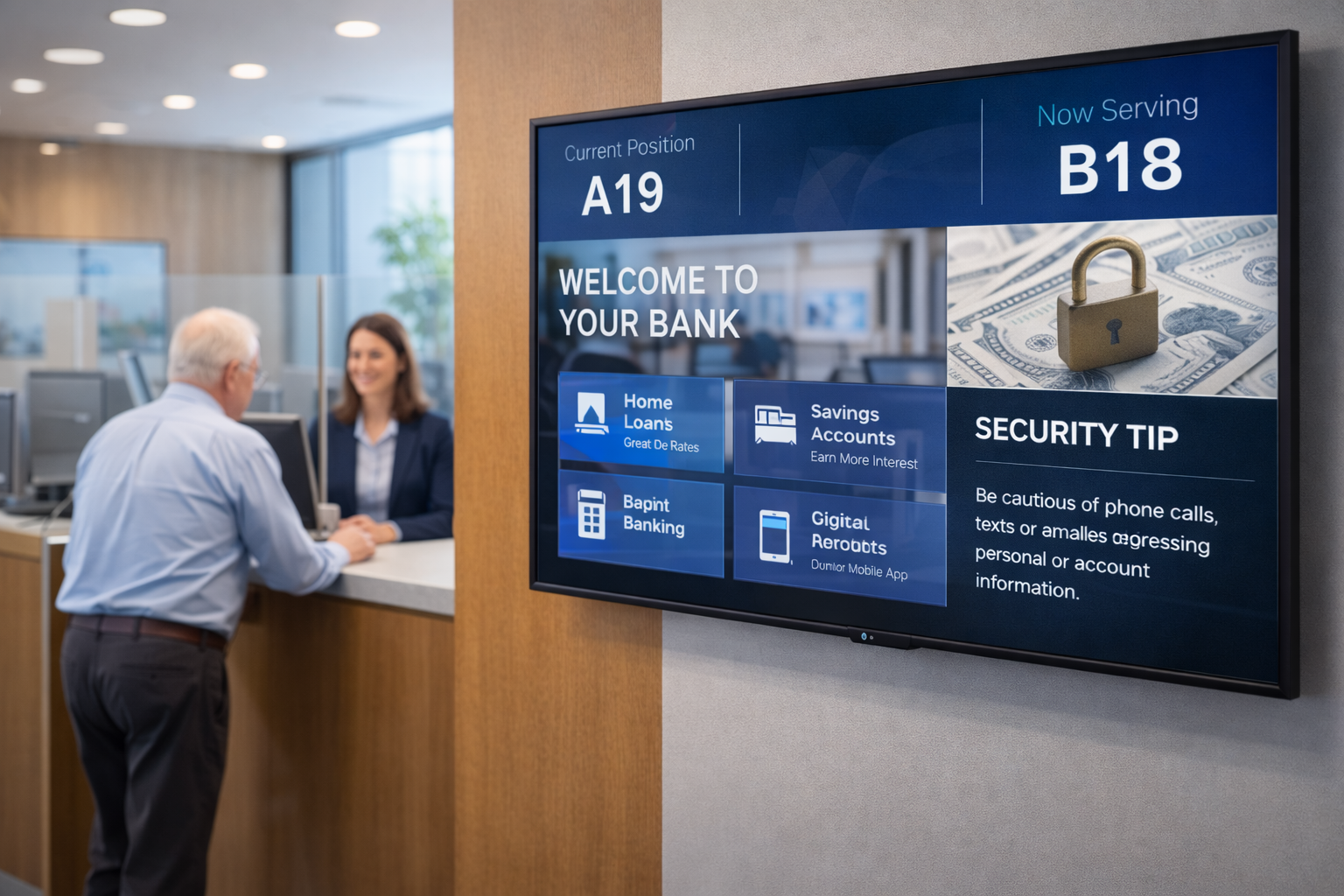
What Is Digital Signage for Banks?
Digital signage for banks refers to the use of networked digital displays inside and outside banking environments to communicate information, guide customers, support staff, and reinforce brand trust. These displays replace or enhance static posters, printed notices, and traditional bulletin boards with dynamic, real-time content that can be updated centrally and instantly.
In the banking sector—where clarity, credibility, and customer confidence are essential—digital signage has become a strategic communication and service tool rather than a purely visual upgrade.
The Purpose of Digital Signage in Banking Environments
Banks operate at the intersection of information, trust, and efficiency. Customers arrive with specific needs—transactions, advice, problem resolution—and often experience anxiety related to finances, time pressure, or complexity. Digital signage helps reduce friction by delivering clear, timely, and relevant information at every stage of the customer journey.
At the same time, banks must communicate regulatory information, promote services responsibly, manage queues, and maintain a professional brand image. Digital signage supports all of these objectives simultaneously.
Where Digital Signage Is Used in Banks
Digital signage is deployed across multiple touchpoints within a bank branch and beyond.
In branch lobbies, screens are often used to welcome customers, display current wait times, explain available services, or provide directions to counters, ATMs, or advisors. These displays set expectations and reduce uncertainty as soon as customers enter.
In waiting areas, digital signage is commonly used for queue management, educational content, service promotions, or financial literacy messaging. This transforms waiting time into an opportunity for engagement rather than frustration.
At teller lines and service desks, signage can display transaction guidelines, required documentation, security reminders, or real-time service updates. This helps streamline interactions and reduce repetitive questions.
In consultation rooms, digital displays may support advisory services by showing product overviews, interest rate information, or interactive presentations during customer discussions.
Outside the branch, window-facing digital signage is often used to promote services, communicate branch hours, or reinforce brand presence even when the bank is closed.
Types of Content Used in Bank Digital Signage
Content on banking digital signage must balance clarity, compliance, and engagement. Common content categories include informational, operational, educational, and promotional messaging.
Informational content includes branch hours, service availability, holiday schedules, and security notices. This ensures customers always have access to accurate, up-to-date information.
Operational content focuses on queue status, appointment reminders, system outages, or procedural updates. These messages help manage expectations and reduce staff workload.
Educational content plays a growing role. Many banks use digital signage to explain financial products, digital banking tools, fraud prevention tips, and general financial literacy topics in simple, accessible language.
Promotional content highlights products such as loans, savings accounts, credit cards, or digital services—but typically in a more restrained and trust-focused manner than traditional retail advertising. In banking, credibility always outweighs flashiness.
How Digital Signage Improves Customer Experience
One of the most significant benefits of digital signage in banks is reduced perceived wait time. When customers are informed and engaged, waiting feels shorter and less frustrating.
Clear messaging also reduces confusion. Customers know where to go, what documents they need, and what services are available before they reach a staff member. This leads to smoother interactions and greater satisfaction.
Digital signage also supports accessibility. Content can be displayed in multiple languages, include visual cues for non-native speakers, or use larger fonts and high-contrast designs for better readability.
Supporting Bank Staff and Operations
Digital signage is not only customer-facing—it also supports internal operations. By answering common questions visually, signage reduces repetitive explanations and frees staff to focus on higher-value interactions.
In some branches, signage is used to display internal announcements, performance metrics, or compliance reminders in staff-only areas, supporting internal communication without relying solely on email.
Centralized content management allows banks to maintain consistency across branches while still enabling local updates when necessary.
Security, Compliance, and Trust Considerations
Banks operate in highly regulated environments, and digital signage must reflect this reality. Content must be accurate, compliant, and carefully governed.
Most banking signage systems include approval workflows, access controls, and content scheduling to ensure messages meet legal and brand standards. Sensitive information is never displayed, and customer privacy is always protected.
When implemented correctly, digital signage enhances trust rather than undermining it. Clean design, calm visuals, and professional tone reinforce the bank’s credibility and stability.
Digital Signage and the Shift to Omnichannel Banking
As more customers adopt mobile and online banking, physical branches are evolving from transaction centers into advisory and relationship-focused spaces. Digital signage plays a key role in this transition.
Screens are often used to promote digital self-service tools, explain mobile app features, or guide customers toward appointments and consultations rather than simple transactions. This helps banks align in-branch experiences with their broader digital strategy.
Measuring the Impact of Digital Signage in Banks
Modern digital signage platforms often include analytics that track content performance, screen uptime, and audience engagement. Banks can use this data to refine messaging, optimize layouts, and ensure screens are delivering real value.
Over time, insights from digital signage usage can inform broader decisions about branch design, staffing, and service offerings.
The Future of Digital Signage in Banking
Digital signage in banks is becoming more intelligent and personalized. Emerging trends include integration with queue systems, appointment platforms, CRM tools, and even AI-driven content recommendations based on time of day or branch traffic patterns.
As branches continue to modernize, digital signage will increasingly act as a real-time communication layer connecting customers, staff, and digital services.
Final Thoughts
Digital signage for banks is not about flashy screens or aggressive promotion. It is about clarity, confidence, and communication in an environment where trust matters deeply.
When thoughtfully designed and strategically managed, digital signage enhances customer experience, supports staff efficiency, reinforces brand credibility, and helps banks adapt to changing customer expectations. In today’s banking landscape, it is no longer a nice-to-have—it is a foundational component of modern branch communication.